
Find California Sex Offenders
California maintains a public sex offender registry under state law. You can search this registry to find registered sex offenders in your area. The California Department of Justice runs the main database at meganslaw.ca.gov. Local law enforcement agencies also keep records. Each county sheriff handles registration in their area. You can look up offenders by name, address, or zip code. The registry shows photos, physical details, and conviction info. Some offenders must register for ten years. Others register for twenty years or life. The tier system depends on the crime.
California Sex Offender Registry Quick Facts
California Megan's Law Database
The state keeps sex offender data in one place. The California Sex and Arson Registry holds information on every person who must register under state law. This registry feeds the public Megan's Law website. Not all registered sex offenders appear on the public site. Some are excluded by law. The Department of Justice updates the website each day based on reports from local police and sheriff departments.
California became the first state to require sex offender registration back in 1947. The registry has grown over the decades. Today it tracks more than 120,000 individuals across the state. Some live in cities. Others are in small towns. A few are listed as transients with no fixed address. You can search for offenders near schools, parks, or your home address using the map tool on the state website.
The main search portal at meganslaw.ca.gov lets you look up registrants by location or name. The site shows full addresses for most offenders. Some only display a zip code. Others are marked as undisclosed per court order. The database includes photos, physical descriptions, and details about the crimes that led to registration. Each profile lists the registration tier and any special conditions like GPS monitoring.
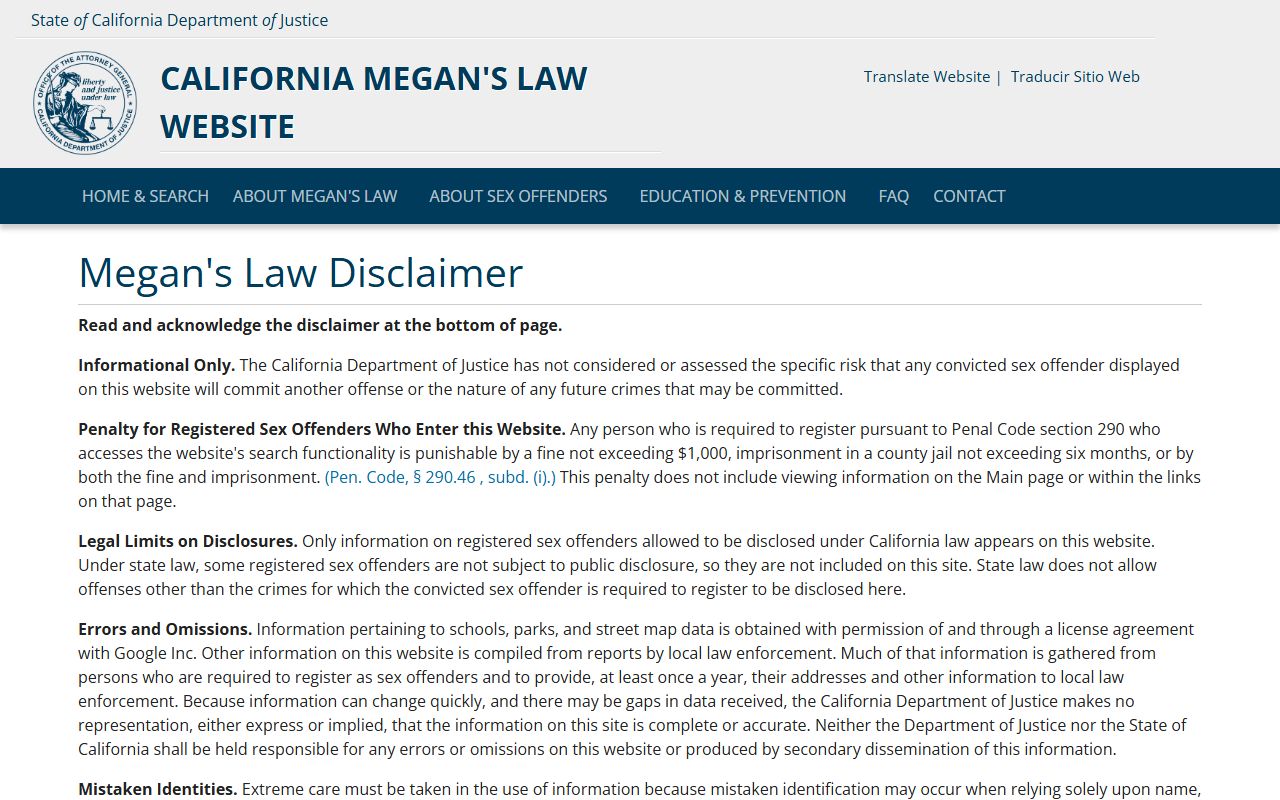
You must accept a disclaimer before using the search tool. The site warns that using registry information to harass or harm an offender is a crime. Penalties include fines up to $50,000 and five years in prison for felony misuse. Anyone who commits a misdemeanor using registry data faces fines between $10,000 and $50,000. Civil liability also applies. Victims can sue for actual damages plus attorney fees.
DOJ Sex Offender Registration
The Attorney General's office oversees the California Sex Offender Registry program. This office sets policy and manages the statewide database. Local agencies report registration data to the DOJ. The DOJ then publishes approved records on the public website. The mission is to give law enforcement and the public accurate information about registered sex offenders in California.
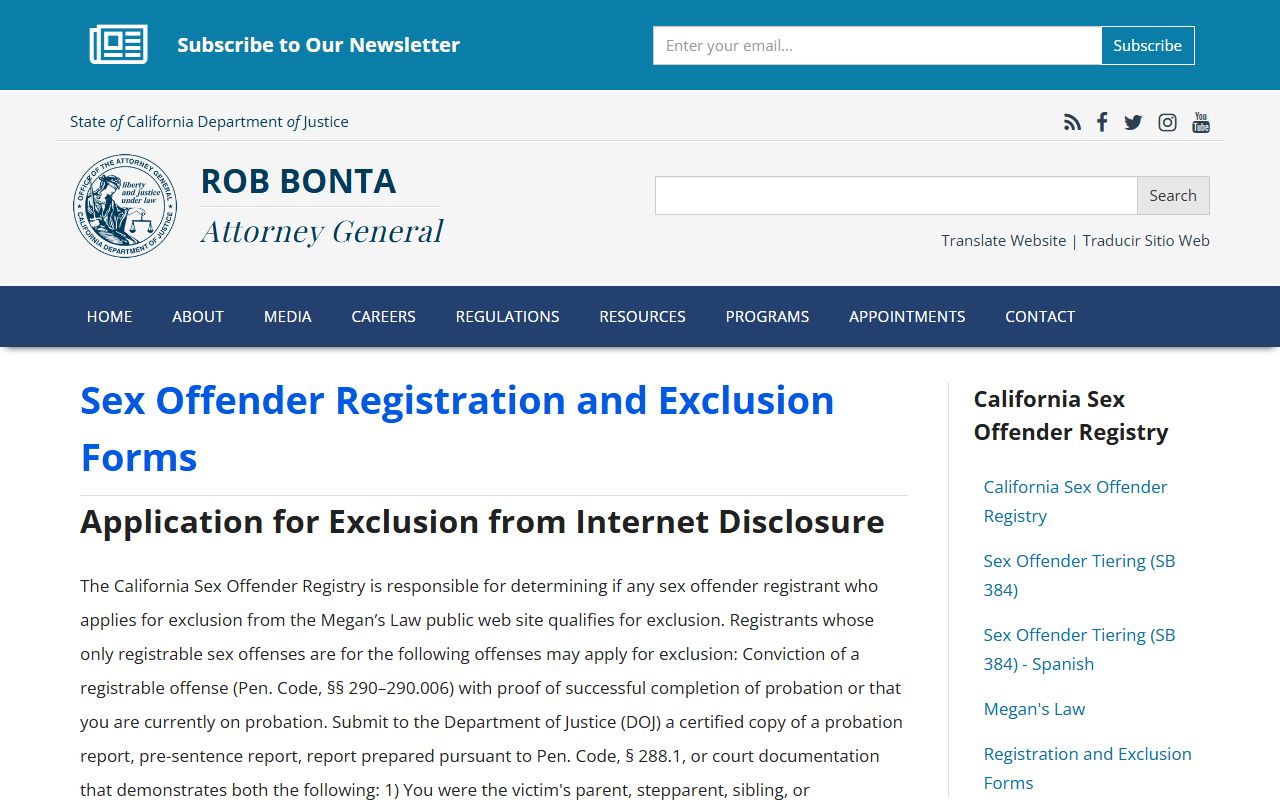
Offenders can apply to be excluded from the public website under certain conditions. The DOJ reviews each application and makes a decision based on the law. Processing an exclusion request takes anywhere from 30 to 90 days or longer. Forms are available on the DOJ sex offender registration forms page. The Application for Exclusion from Internet Disclosure is form CJIS-4046D. Other forms cover internet identifier registration and college course enrollment.
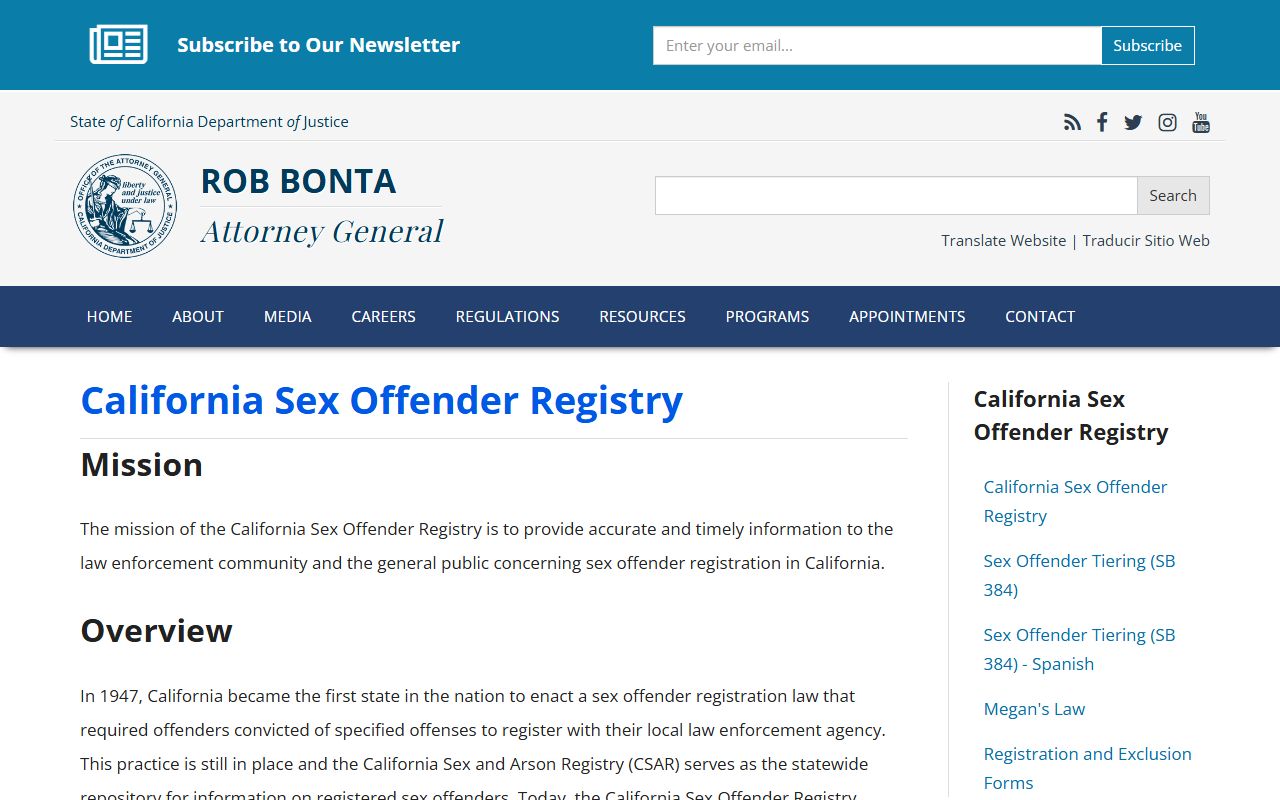
Registrants who violate the rules face criminal charges. Failing to register on time is a crime. Providing false information is also illegal. Registered sex offenders are not allowed to use the search function on the Megan's Law website. Anyone required to register who accesses the search tool can be fined up to $1,000 and jailed for up to six months. The law aims to prevent offenders from using the system to locate other registrants or victims.
Local Registration Requirements
Sex offenders must register with local law enforcement in the city or county where they live. Registration happens within five working days of release from custody. After that, offenders update their information once per year. The update must occur within five working days before or after the person's birthday. Some offenders update more often. Transients check in every 30 days. Sexually violent predators register every 90 days.
Each county sheriff runs a registration unit. Some cities have their own police department registration offices. Offenders go to these offices in person to complete the registration process. They provide current address, employment details, vehicle information, and any internet identifiers they use. Officers take a new photo and verify the information. The local agency then reports the data to the state DOJ.
No fees apply to sex offender registration in California. State law prohibits charging any fee for this mandatory process. Offenders do not pay to register or to update their information. This rule applies at the state, county, and city level. If an agency tries to charge a fee, the registrant can report the violation to the Department of Justice.
CDCR and Parole Supervision
The California Department of Corrections and Rehabilitation supervises sex offenders on parole. CDCR runs the Sex Offender Management Program, which combines enhanced supervision with treatment and GPS monitoring. All sex offender parolees wear electronic tracking devices. This program is one of the largest GPS monitoring efforts by a single law enforcement agency in the United States. It has been in place since 2008.
Parolees must report to their parole agent within one working day after release from custody. The agent attaches a GPS device to the person's ankle. The device tracks the offender's location at all times. If the person enters a restricted area like a school or park, the system sends an alert. Parole agents can respond quickly to violations.
CDCR also operates the California Incarcerated Records and Information Search system. This online tool at ciris.mt.cdcr.ca.gov lets you look up individuals currently in state custody. You can search by name or CDCR number. The results show the person's age, admission date, current location, and Board of Parole Hearing dates. This helps you track someone who is still serving time before they are released and required to register.
County Sheriff Offices
California has 58 counties. Each county sheriff manages sex offender registration for their jurisdiction. Some large cities have their own police departments that handle registration. The process is similar across the state, but contact information and hours vary by location. You can find your county's registration office by visiting the sheriff's website or calling the main number.
Sheriff departments keep local records on all registered offenders in their area. They conduct compliance checks to verify that offenders are living at the addresses they reported. These checks help ensure the registry stays accurate. If an offender moves or fails to update their information, the sheriff can issue a warrant. Registration violations are prosecuted as felonies or misdemeanors depending on the circumstances.
Some counties post additional information on their websites. Orange County Sheriff runs the SONAR unit, which stands for Sex Offender Notification and Registration. San Diego County has a SAFE Task Force that monitors high-risk offenders. Sacramento County Sheriff operates a similar team. These specialized units work to protect the community by keeping close tabs on dangerous individuals.
National Sex Offender Registry
The U.S. Department of Justice maintains a national sex offender database. This tool searches registries from all 50 states, the District of Columbia, Puerto Rico, Guam, and tribal territories. You can use it to check if someone has registered in another state before moving to California. The website is nsopw.gov. It combines data from local, state, and federal sources into one search.
The national registry does not replace state registries. It is a supplement. Some states update their data more frequently than others. If you need current information about a California offender, use the state Megan's Law site first. The national tool is better for tracking offenders who move between states or have a history in multiple jurisdictions.
Risk Assessment Tools
SARATSO is a nonprofit organization that provides risk assessment resources. Their website at saratso.org offers information on evidence-based tools used to evaluate sex offenders. These assessments help determine supervision levels and treatment needs. Law enforcement agencies and parole officers use these tools to manage offenders more effectively. The public can learn about the science behind risk assessment and how it affects community safety.
California Registration Laws
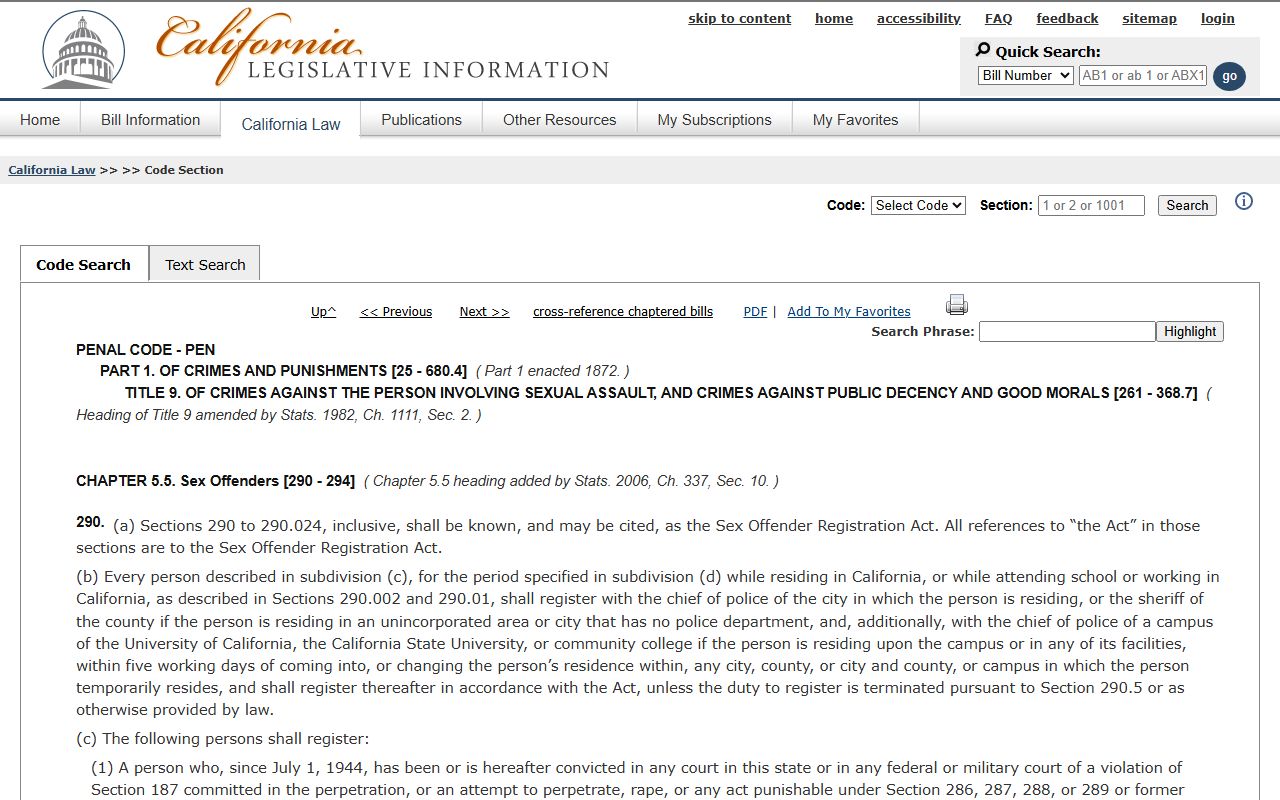
California law requires sex offender registration under Penal Code Section 290. This statute is known as the Sex Offender Registration Act. It lists the crimes that trigger a registration requirement. Anyone convicted of certain sex offenses must register for life or a set number of years depending on their tier. The law covers crimes like rape, lewd acts with a minor, and sexual battery. Penal Code Section 290 details the full list of registrable offenses and the procedures offenders must follow.
The three-tier system went into effect on January 1, 2021. Before that date, most sex offenders registered for life. The new system under Senate Bill 384 divides offenders into three tiers based on the severity of their crime. Tier One offenders register for at least ten years. Tier Two offenders register for at least twenty years. Tier Three offenders register for life. Juvenile offenders have shorter minimum periods. Tier One juveniles register for five years. Tier Two juveniles register for ten years.
Offenders in Tier One or Tier Two can petition the court to end their registration requirement after completing the minimum period. The court has 60 days to respond to the petition. If the court grants the request, the person no longer has to register. They are removed from the public website. Not everyone qualifies for this relief. Tier Three offenders cannot petition for removal. They must register for life unless they receive a pardon or other legal remedy.
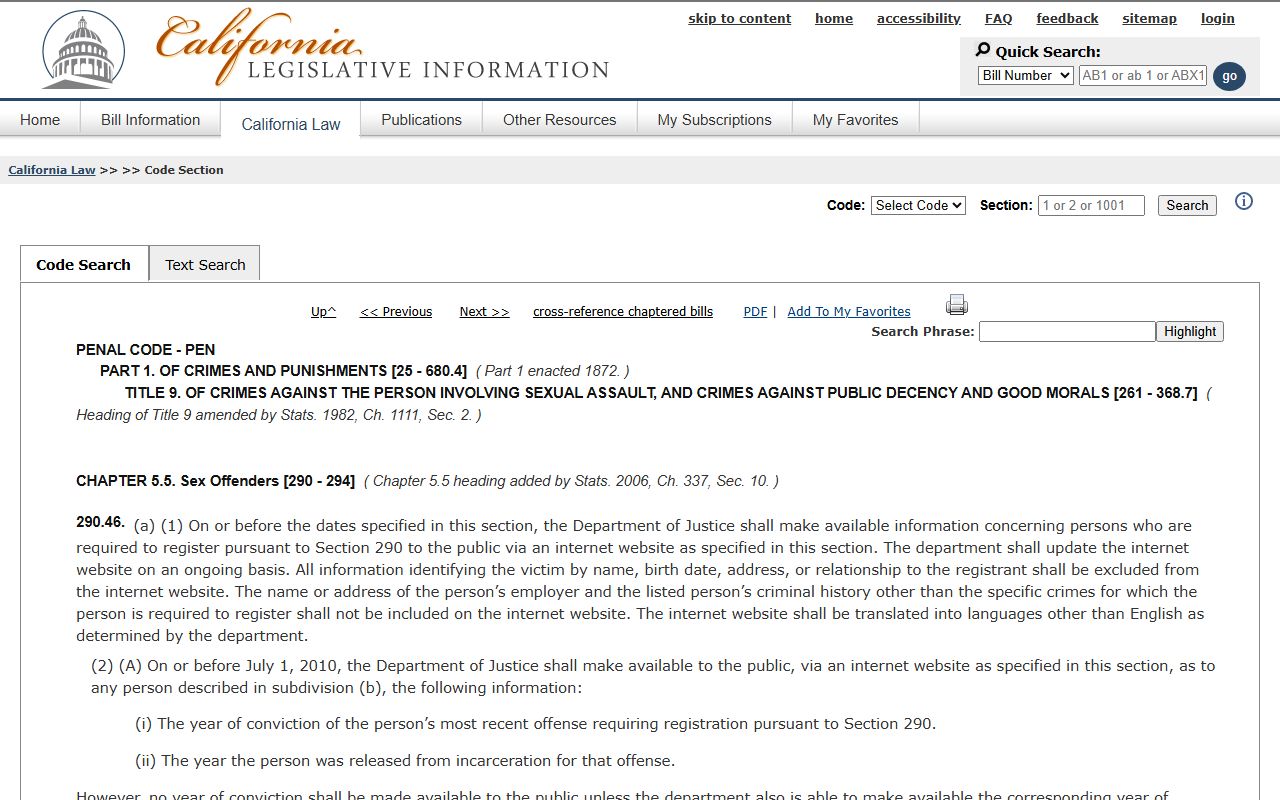
Penal Code Section 290.46 mandates that the DOJ publish sex offender information on the internet. This is the legal basis for the Megan's Law website. The statute specifies what information can be disclosed to the public. It also lists categories of offenders who are excluded from the website. For example, some juvenile offenders and certain low-level misdemeanor offenders do not appear on the public site even though they must register with local law enforcement.
Update requirements are set out in Penal Code Section 290.012. This law says most offenders update once per year within five working days of their birthday. Sexually violent predators update every 90 days. Transients with no permanent address update every 30 days. Failing to update on time is a criminal offense. The penalties depend on whether the violation is charged as a felony or misdemeanor.
Public notification rules are in Penal Code Section 290.45. This statute allows law enforcement to disclose an offender's name, aliases, physical description, photograph, date of birth, verified address, vehicle information, and the crimes that led to registration. Police and sheriffs can share this information with the community when they believe it is necessary for public safety.
Specific Offenses
Penal Code Section 288 defines lewd or lascivious acts with a child. This crime involves touching a child under 14 years old for sexual purposes. Penalties range from three to eight years in prison if no force is used. If force or violence is involved, the sentence increases to five to ten years. Anyone convicted under this statute must register as a sex offender. Most fall into Tier Three and register for life.
Penal Code Section 261 covers rape. This is defined as nonconsensual sexual intercourse accomplished by force, threats, or fraud. The punishment is three, six, or eight years in state prison. Rape generally requires lifetime registration under Tier Three. Some cases may qualify for a lower tier depending on the specific facts and the offender's age at the time of the crime.
Other crimes that require registration include indecent exposure, sexual battery, pimping involving a minor, possession of child pornography, and kidnapping for sexual purposes. The full list is long. If you are unsure whether a specific crime requires registration, you can review the statute or contact the DOJ. The law also covers attempts and conspiracies to commit these offenses. Even if the crime was not completed, the person may still have to register.
Browse by Location
California Counties
Each of California's 58 counties maintains sex offender registration records through the local sheriff's office. You can find contact information, office hours, and registration procedures for your county.
Los Angeles County | San Diego County | Orange County | Riverside County | San Bernardino County | Santa Clara County
View All 58 California Counties →
Major California Cities
Large cities often have dedicated police department registration units. Find sex offender registration information for California's most populous cities.
Los Angeles | San Diego | San Jose | San Francisco | Fresno