
San Francisco Sex Offender Database
Registered sex offenders in San Francisco must check in with the San Francisco Police Department. The city has about 874,000 residents and sits on the tip of a peninsula. Anyone required to register under California law who lives in San Francisco reports to the police station at 1245 3rd Street. Registration happens within five working days of moving to the city or being released from custody. Annual updates occur near the offender's birthday. SFPD handles all PC 290 registrations for city residents. You can search for registered sex offenders in San Francisco using the California Megan's Law website. The database shows photos, addresses, and conviction details for every person registered in the city. Some profiles display full street addresses while others show only zip codes based on court orders and legal exemptions.
San Francisco Registry Quick Facts
SFPD Sex Offender Registration
The San Francisco Police Department operates the sex offender registration unit for the city. The station is located at 1245 3rd Street in the Bayview neighborhood. This is the main headquarters building where all PC 290 registrations are processed. Offenders must register in person during business hours. Call ahead to check current procedures. Officers take a new photo at each visit and verify all information including address, employment, vehicle data, and internet identifiers. The police then report this data to the California DOJ which updates the public Megan's Law website daily.
| Agency | San Francisco Police Department |
|---|---|
| Address | 1245 3rd Street San Francisco, CA 94158 |
| Phone | (415) 837-7000 |
| Hours | Contact for registration hours |
| Website | sanfranciscopolice.org |

The SFPD Megan's Law page provides information on sex offender registration and public safety. The site explains registration requirements and directs residents to the state Megan's Law website for searches. San Francisco is unique because it is both a city and a county. There is no separate sheriff department for registration. All offenders in San Francisco register with SFPD regardless of where in the city they live.
Find San Francisco Sex Offenders
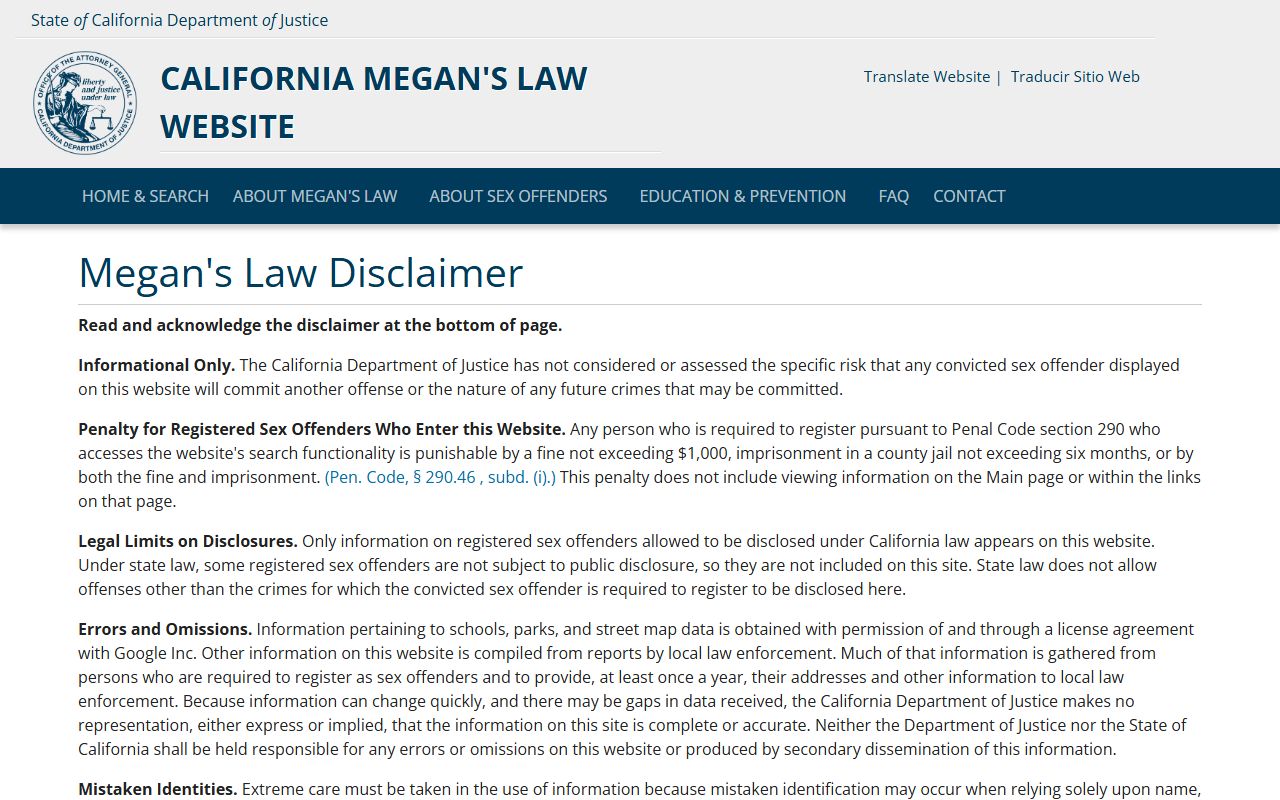
The primary tool for finding sex offenders in San Francisco is the state Megan's Law website at meganslaw.ca.gov. Enter your San Francisco address or zip code to see a map of registered offenders nearby. Each pin on the map links to a profile showing the person's photo, age, physical description, and details about their conviction. You can filter results by distance from your location or by specific offense categories. The database updates daily based on reports from SFPD and other agencies statewide.
Not all registered offenders show a complete street address on the public site. Some display only a zip code. Others are marked as location undisclosed due to court orders. Statewide, about 55,000 offenders have full addresses posted. Another 6,000 show only zip codes. Even when the exact address is hidden, you can still view photos and conviction information. The system covers all of San Francisco. You can set up email alerts to get notified when an offender moves into your area or updates their information.
The California Department of Justice sex offender registry page explains how the system operates. The DOJ receives data from every city and county in California. They review each submission and post approved records within 24 hours. This keeps the San Francisco database current. The DOJ also manages applications for exclusion from the public website under certain legal conditions set out in state law.
You can also use the National Sex Offender Public Website to search multiple states simultaneously. This federal tool is useful if you want to check someone's history before they moved to San Francisco. The national site may not update as quickly as state databases, so use the California Megan's Law site for current information on San Francisco offenders.
PC 290 Requirements in San Francisco
California law requires anyone convicted of certain sex offenses to register with local law enforcement. In San Francisco, this means reporting to SFPD at 1245 3rd Street. Registration must occur within five working days of release from custody or moving to the city. Missing this deadline is a criminal offense. The law applies to anyone who lives, works, or attends school in San Francisco.
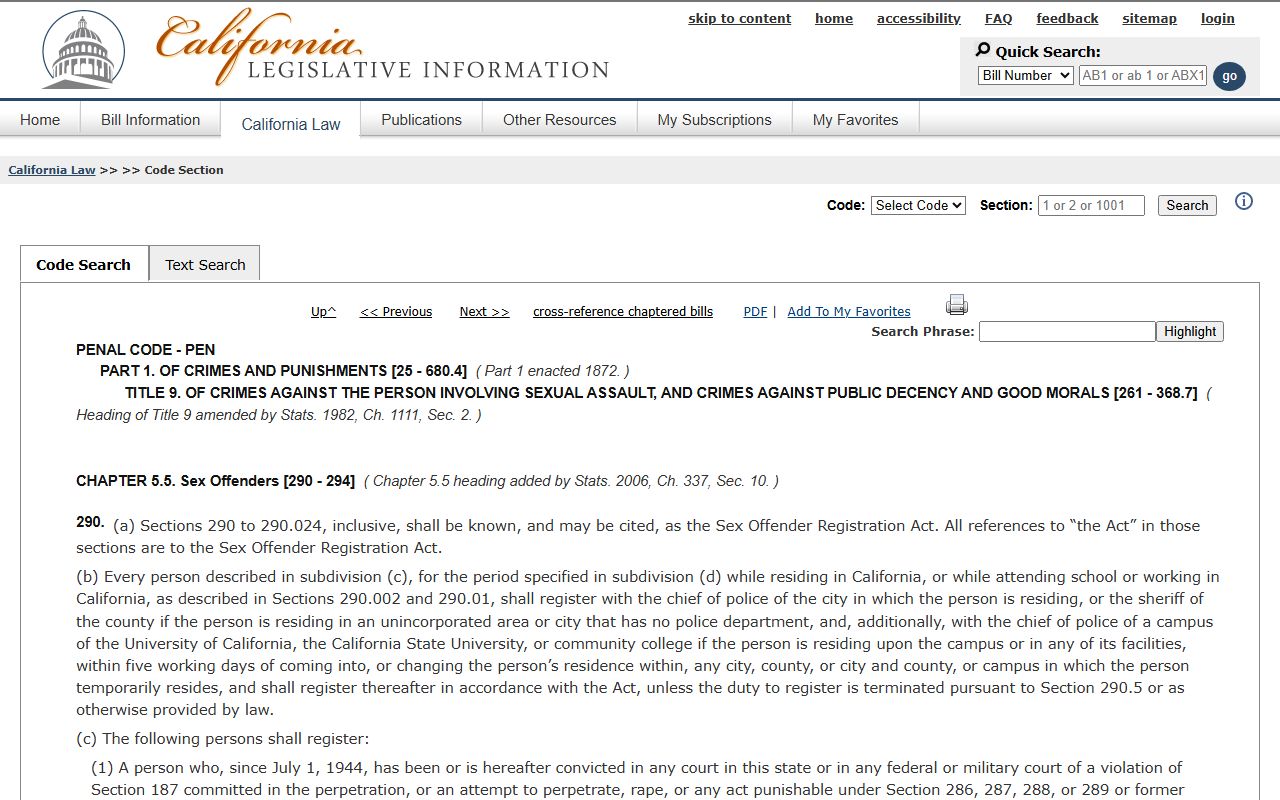
Penal Code Section 290 lists all crimes that require registration in California. These include rape, child molestation, sexual battery, indecent exposure, and possession of child pornography. The statute also covers attempts and conspiracies to commit these offenses. San Francisco residents convicted of any registrable crime must follow the procedures set out in this law. The three-tier system divides offenders by crime severity. Tier One means ten years of registration. Tier Two means twenty years. Tier Three means lifetime registration.
Most offenders in San Francisco update their registration once per year within five working days before or after their birthday. SFPD may send reminders but it is the offender's responsibility to appear on time. Some must update more frequently. Sexually violent predators register every 90 days. Transients with no fixed address register every 30 days. Missing an update can result in immediate arrest and new criminal charges.
Under Penal Code Section 290.012, no fees apply to sex offender registration in California. You do not pay to register in San Francisco. You do not pay for annual updates. The process is completely free by state law. If anyone tries to charge you, report it to the Department of Justice.
Note: Some Tier One and Tier Two offenders can petition the court to end their registration requirement after completing the minimum period.
California Sex Offender Laws
Penal Code Section 290.46 requires the DOJ to publish sex offender information on the internet. This statute provides the legal foundation for the Megan's Law website. It specifies what information can be shared with the public including names, photos, addresses, and conviction details. It also lists which offenders are excluded from the website. Some juveniles and certain low-level offenders do not appear online even though they must register with SFPD.
Penal Code Section 290.45 allows law enforcement to disclose offender information to the community. SFPD can share names, photos, addresses, vehicle information, and conviction details when they believe it is necessary for public safety. However, misusing this information is illegal. Using registry data to harass or harm an offender can result in fines up to $50,000 and five years in state prison.
Senate Bill 384 created the three-tier system that took effect on January 1, 2021. Before that date, most offenders registered for life with no option for relief. The new law provides some offenders a path to end their registration after a set number of years. The court has 60 days to respond to tier relief petitions. The DOJ sex offender forms page has applications for tier relief and exclusion from the public website. Processing takes 30 to 90 days or longer.
San Francisco Resources and Support
The San Francisco Police Department handles all sex offender registration for city residents. Call (415) 837-7000 for general police inquiries. Visit sanfranciscopolice.org for more information. Since San Francisco is a consolidated city-county, there is no separate county sheriff office. All registration happens through SFPD.
Victims of sex crimes can access support through local agencies. The San Francisco District Attorney Victim Services Division provides assistance and can explain your rights. The California Department of Corrections and Rehabilitation Victim Services line is 1-877-256-6877. Email victimservices@cdcr.ca.gov. These services are free and confidential for San Francisco residents.
If you have information about a registered sex offender in San Francisco who is violating the law, contact SFPD at (415) 837-7000. You can also call the CDCR tip line or email CDCRDAPOTIPLINE@CDCR.CA.GOV. Reports are taken seriously and can lead to enforcement action. Registration violations often result in arrest and prosecution that can add years to an offender's sentence.
The CIRIS database allows you to look up people currently in state custody. This helps you track someone still serving time before they are released and required to register in San Francisco. Search by name or CDCR number. Results show admission date, current facility location, and upcoming parole hearing dates.
San Francisco County Sex Offender Registry
San Francisco is a consolidated city-county. The city and county are the same jurisdiction with SFPD handling all sex offender registration. For more information on San Francisco registration policies and enforcement, visit the San Francisco County page.