
Riverside County Sex Offender Records
Riverside County sex offenders register through the Sheriff's Office at 4095 Lemon Street in Riverside. Call 951-955-9324 for registration information. This county has one of the largest populations in California, so it also tracks many registered offenders. Most update once per year within five days of their birthday. Transients come in every 30 days. Sexually violent predators report every 90 days. The California Megan's Law website shows offenders by city, zip code, or street address. Results include photos and crime details. Riverside County implemented the tiered registration system in 2021 under Senate Bill 384. Tier One offenders register ten years. Tier Two offenders register twenty years. Tier Three offenders register for life.
Riverside County Sex Offender Stats
Sheriff Registration Office
The Riverside County Sheriff's Office handles sex offender registration at the main facility on Lemon Street. The sheriff's website has information about SB 384 and the tiered registration system. Contact the office for current procedures and hours. Large counties like Riverside process many registrants each day. The office staff are trained in state registration requirements and local policies.
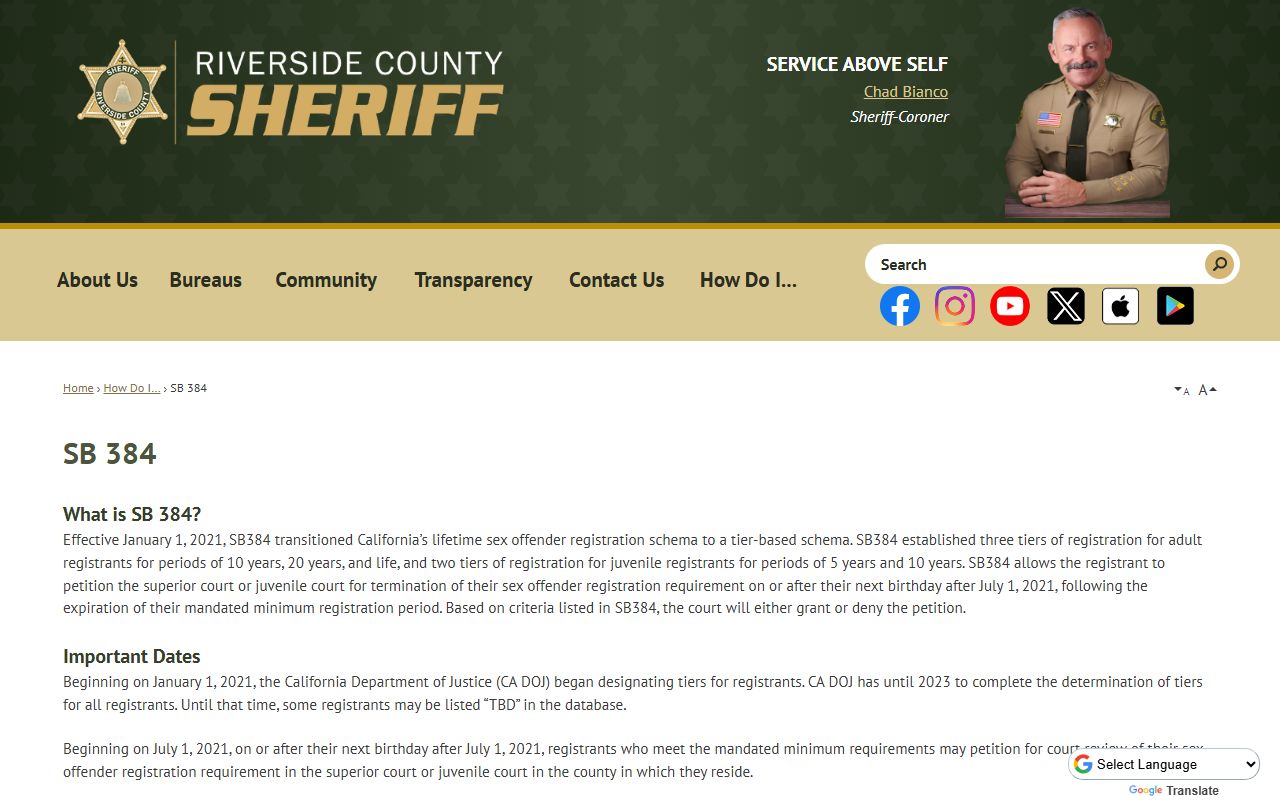
First-time registrants report within five working days after release from custody. That deadline is set by state law. Missing it is a crime. The initial registration includes providing your address, employment information, vehicle details, and internet identifiers. The deputy takes a photo and enters all data into the state system. This information feeds the California Megan's Law website.
Annual updates happen near your birthday. You have five working days before or after the date. Bring updated information about any changes. New address, new job, new car, new email accounts. All of it must be reported. The deputy verifies the information and updates the system. No appointment is required for annual updates, but call ahead to confirm office hours.
Transients without permanent addresses register every 30 days. They report their general location and where they sleep. Sexually violent predators register every 90 days regardless of housing status. These frequent check-ins help law enforcement track high-risk individuals. The sheriff conducts compliance checks to verify offenders live where they claim. Field deputies visit homes unannounced. If someone is not at the registered address, the sheriff issues a warrant.
Megan's Law Search
You can search for Riverside County sex offenders at meganslaw.ca.gov. Enter a city name like Riverside, Moreno Valley, or Corona. Or type a street address. The map shows pins for each offender near that location. Click a pin to see the profile. It includes a photo, physical description, conviction information, and registration tier. Most offenders have full addresses posted. Some only show a zip code. A few are marked undisclosed per court order.
Riverside County has large urban areas and rural desert communities. Offenders live in cities, small towns, and unincorporated areas. The Megan's Law site covers all these locations. You can search the whole county or focus on one neighborhood. The site also has special search options for schools and parks. It draws a radius around those places and lists offenders within that distance.
Not every registered sex offender appears on the public website. Some are excluded based on the type of crime or their age when convicted. Penal Code Section 290.46 sets these rules. The Department of Justice decides who gets posted. The most serious cases usually appear. Low-level Tier One offenders may not show up.
Registration Procedures
When you register in Riverside County, bring valid photo ID. A California driver license or state ID card works. You need proof of residence. A lease, mortgage statement, or utility bill helps. If you own a vehicle, have the registration ready. Write down all email addresses and social media accounts. State law requires disclosing internet identifiers.
The deputy fills out forms with you. They enter data into the computer. A photo is taken. You sign paperwork confirming everything is correct. If your information changes later, report it within five working days. That includes new addresses, new jobs, new vehicles, and new online accounts. Keeping the registry accurate is your legal duty under California law.
No fees apply. The state law says sex offender registration is free. The sheriff cannot charge you to complete this process. That rule applies to initial registration, annual updates, and all other registration services. If someone tries to collect money, report it to the California Department of Justice.
California DOJ Resources
The California Department of Justice manages the statewide sex offender registry. Visit oag.ca.gov/sex-offender-reg for policy information and forms. Offenders can download the Application for Exclusion from Internet Disclosure if they think they qualify. The DOJ reviews these requests and issues decisions. Processing takes 30 to 90 days or longer depending on case volume.
Other forms include the Internet Identifier Registration Form for reporting new email or social media accounts. There is also a DOJ Online College Course Registration Form for offenders taking online classes. The DOJ publishes FAQs about Senate Bill 384, which created the tiered system in 2021. These resources help offenders understand their obligations and rights under the law.
Tier One offenders register for ten years. After that, they can petition the court to end their registration requirement. Tier Two offenders register for twenty years before they can petition. Tier Three offenders register for life with no option to petition unless they receive a pardon. The court decides whether to grant relief based on the facts of each case.
CDCR Inmate Lookup
The California Department of Corrections and Rehabilitation operates CIRIS at ciris.mt.cdcr.ca.gov. This tool lets you look up someone in state prison. Enter a name or CDCR number. The system shows current custody status, location, admission date, and parole hearing dates. This helps if you want to know when someone will be released.
Once released, they have five working days to register with the local sheriff. CDCR also supervises sex offender parolees with GPS devices. All parolees wear ankle monitors. The Sex Offender Management Program combines supervision, treatment, polygraph testing, and electronic tracking. Parole agents get alerts if someone enters a restricted area like a school or park.
City Police Departments
Some cities in Riverside County have their own police departments that handle registration. Riverside Police Department has a registration unit at 4102 Orange Street. Call 951-354-2007 for information. Moreno Valley uses the county sheriff station at 22850 Calle San Juan De Los Lagos. Corona Police Department handles registration at 730 Public Safety Way. Call 951-736-2330.
If you live in one of these cities, check whether the city police or county sheriff handles your registration. Most smaller cities use the county sheriff. Larger cities have their own units. When in doubt, call the local police department and ask. They will direct you to the right office.
National Registry
The U.S. Department of Justice runs a national sex offender search at nsopw.gov. This tool searches all 50 states plus U.S. territories. Use it to check if someone registered in another state before moving to California. The database combines records from local, state, and federal sources. It does not replace the California Megan's Law site but adds another layer of information.
Offenders who move between states must register in each new location. The national registry helps track these movements. If you are researching someone with a multi-state history, start with this tool. Then check the California site for current local data in Riverside County.
Legal Framework
Penal Code Section 290 requires sex offender registration. This law lists crimes that trigger the duty to register. Rape, lewd acts with minors, sexual battery, kidnapping for sexual purposes, indecent exposure, and possession of child pornography are all included. Anyone convicted of these offenses must register.
The three-tier system took effect on January 1, 2021. Senate Bill 384 created this structure. Before that, most offenders registered for life. Now they are divided into tiers based on the crime. Lower-level offenses get Tier One with ten years of registration. Mid-level offenses get Tier Two with twenty years. The most serious crimes get Tier Three with lifetime registration.
Update rules come from Penal Code Section 290.012. Most offenders update annually within five working days of their birthday. Sexually violent predators update every 90 days. Transients update every 30 days. Failing to update on time is a criminal offense. Penalties include jail time and fines. Riverside County prosecutors handle these cases in local court.
Penal Code Section 290.45 governs public notification. This law allows law enforcement to disclose an offender's name, aliases, physical description, photo, date of birth, address, vehicle information, and crimes. Sheriffs and police chiefs can share this information when they believe it is necessary for public safety.
Cities in Riverside County
Riverside County includes several large cities. Riverside, Moreno Valley, Corona, and Murrieta all have populations over 100,000. Other cities include Temecula, Hemet, Perris, and Cathedral City. Sex offenders in these cities may register with local police departments or the county sheriff depending on the city.
Note: Only cities with populations over 100,000 have dedicated pages on this site.
Nearby Counties
Riverside County borders several other counties. To the west is Orange County and San Bernardino County. To the south is San Diego County and Imperial County. To the north is San Bernardino County. Each county has its own registration system. If you are searching for offenders in multiple areas, check each county separately.