
Placer County Sex Offender Database
Placer County sex offenders register with the Sheriff's Records Unit at 2929 Richardson Drive in Auburn. The office requires appointments for all registration services. You can call 530-889-7800 to schedule. Most sex offenders update once per year within five days of their birthday. Transients check in every 30 days. Violent predators register every 90 days. The California Megan's Law website shows offenders in this county. You can search by city, zip code, or address. Results include photos and crime details. The tier system affects how long each person must register. Some stay on the list ten years. Others register for twenty years or life.
Placer County Sex Offender Registration
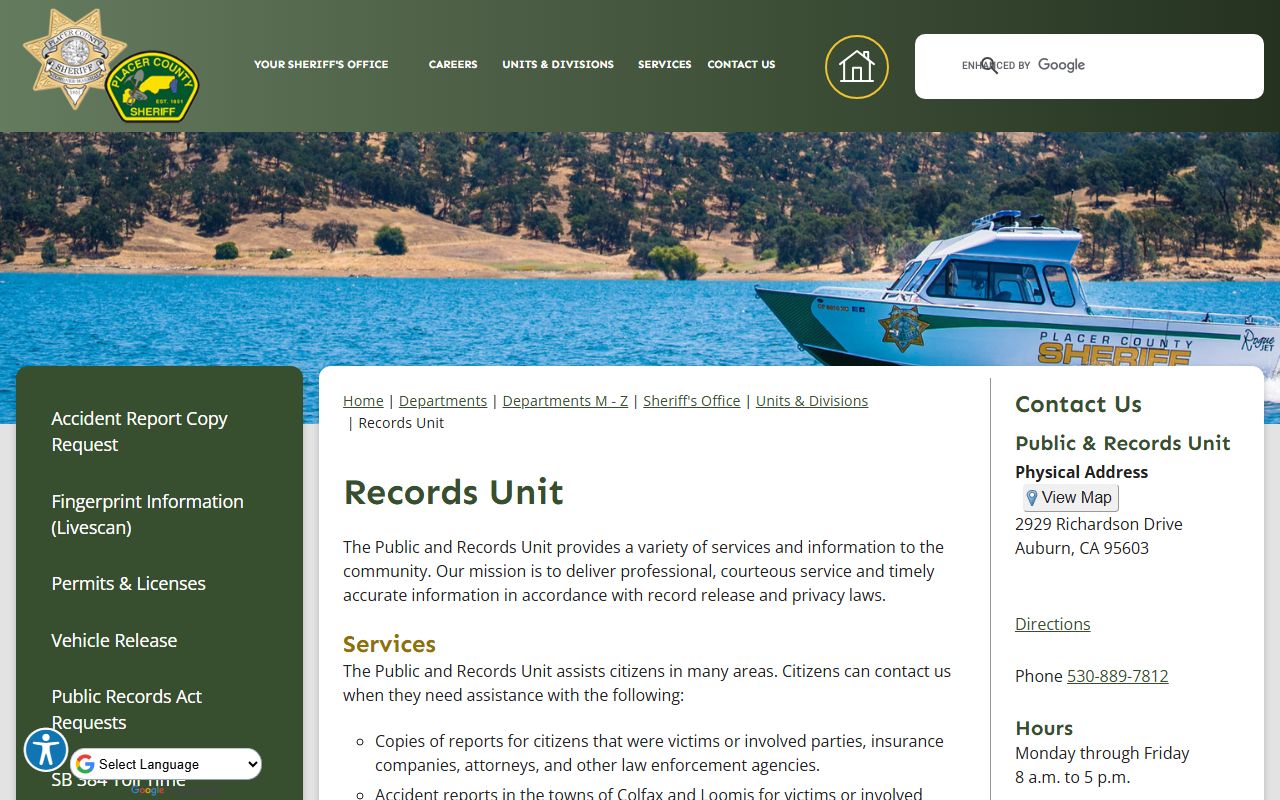
Sheriff Records Unit
The Placer County Sheriff Records Unit handles all sex offender registration. The office sits inside the main sheriff complex on Richardson Drive. Staff process registrations by appointment only. Walk-ins are not accepted for this service. Offenders must call ahead to set up their check-in time. The office provides forms and takes photos during the appointment.
Registration includes giving your address. You also share work details. If you drive, bring vehicle info. List any online accounts you use. The deputy will take your picture. They check your ID. All this data goes into the state system. The California Department of Justice gets updated records from Placer County each day. Changes show up on the public website within 24 hours in most cases.
First-time registrants arrive within five working days after release from custody. That rule comes from state law. Missing that deadline is a crime. It can lead to arrest. Annual updates happen near your birthday. You have a five-day window before or after the date. Transients come in monthly. Sexually violent predators report every three months. Each visit requires a new appointment.
The Records Unit verifies addresses through field checks. Deputies visit homes to confirm offenders live where they claim. If someone moves without updating, the sheriff issues a warrant. Registration violations are prosecuted. Placer County takes compliance seriously. The goal is an accurate registry that protects public safety.
California Megan's Law Search
The state Megan's Law website at meganslaw.ca.gov shows sex offenders in Placer County. You type in a city name like Roseville or Lincoln. Or use a street address. The map shows pins for each offender near that location. Click a pin to see details. The profile includes a photo, physical description, and conviction information. Most offenders have full addresses posted. Some only show zip codes. A few are marked undisclosed per court order.
Placer County has both urban and rural areas. Offenders live in cities like Roseville. Others are in small towns. A few reside in unincorporated areas. The registry covers all these locations. You can search the whole county or focus on one neighborhood. Schools and parks have special search options. The site draws a radius around those places and lists offenders nearby.
Registration tiers affect disclosure. Tier One offenders with low-level crimes may not appear on the public site. Tier Two and Tier Three offenders usually do. The law sets these rules. The Department of Justice decides who gets posted based on the statute. Not every registered person shows up in your search, but the most serious cases do.
Local Registration Procedures
When you register in Placer County, bring valid ID. A California driver license works. So does a state ID card. You need proof of where you live. A lease or utility bill helps. If you own a car, have the registration handy. Write down all your email addresses and social media accounts. The law requires disclosing internet identifiers.
The appointment lasts about 30 minutes. The deputy fills out forms with you. They enter data into the computer. A photo is taken. You sign paperwork confirming the information is correct. If anything changes later, you must report it within five working days. That includes new addresses, new jobs, and new vehicles.
No fees apply. California law says sex offender registration is free. The sheriff cannot charge you to complete this process. If someone asks for money, report it to the Department of Justice. The same rule applies to annual updates and transient check-ins. All registration services are provided at no cost to the offender.
Offenders who work or go to school in Placer County but live elsewhere still register with the sheriff here. State law requires registration in any county where you work or attend school. That means some people register in multiple counties. Each location tracks offenders within its boundaries. The state system links all the records together.
State DOJ Resources
The California Department of Justice manages the statewide sex offender registry. Their website at oag.ca.gov/sex-offender-reg has policy information and forms. Offenders can download the Application for Exclusion from Internet Disclosure if they think they qualify. The DOJ reviews these requests and issues decisions. Processing takes 30 to 90 days or more depending on the case.
Other forms include the Internet Identifier Registration Form and the DOJ Online College Course Registration Form. These help offenders stay in compliance with reporting requirements. If you need to register a new email or social media account, use the proper form. The DOJ also publishes FAQs about the tiered registration system that started in 2021 under Senate Bill 384.
Tier One offenders register for ten years. Tier Two offenders register for twenty years. Tier Three offenders register for life. After completing the minimum period, some can petition the court to stop registering. The court decides whether to grant relief. Tier Three offenders cannot petition unless they get a pardon or other legal remedy.
CDCR Inmate Lookup
The California Department of Corrections and Rehabilitation operates CIRIS. That stands for California Incarcerated Records and Information Search. You can use this tool at ciris.mt.cdcr.ca.gov to look up someone in state prison. Enter a name or CDCR number. The system returns current custody status, location, admission date, and parole hearing dates.
This helps if you want to know when someone will be released. Once they get out, they have five working days to register with the local sheriff. Tracking their release date lets you anticipate when they might appear on the Megan's Law website. CDCR also supervises sex offender parolees with GPS devices. All parolees wear ankle monitors that track their location.
National Registry
The U.S. Department of Justice runs a national sex offender search at nsopw.gov. This tool searches all 50 states plus U.S. territories. Use it to check if someone registered in another state before moving to California. The database combines records from local, state, and federal sources. It does not replace the California Megan's Law site but adds another layer of information.
Some offenders move between states. They must register in each new location. The national registry helps track these movements. If you are researching someone with a history in multiple states, start with this tool. Then check the California site for current local data.
Legal Framework
California requires sex offender registration under Penal Code Section 290. This law lists crimes that trigger a registration duty. Rape, lewd acts with minors, and sexual battery are on the list. So are kidnapping for sexual purposes and possession of child pornography. Anyone convicted of these offenses must register.
The three-tier system started on January 1, 2021. Senate Bill 384 created this structure. Before that, most offenders registered for life. Now the law divides them into tiers based on the crime. Lower-level offenses get Tier One. Mid-level offenses get Tier Two. The most serious crimes get Tier Three with lifetime registration.
Penal Code Section 290.46 requires the DOJ to post offender information online. This statute creates the Megan's Law website. It also sets rules for what data can be disclosed. Some offenders are excluded from the public site even though they register with local law enforcement. The law protects certain juveniles and low-level misdemeanor offenders from internet disclosure.
Update rules come from Penal Code Section 290.012. Most offenders update annually. Sexually violent predators update every 90 days. Transients update every 30 days. Failing to update on time is a criminal offense. Penalties include jail time and fines. Placer County prosecutors handle these cases in local court.
Cities in Placer County
Placer County includes several cities. The largest is Roseville with over 100,000 residents. Sex offenders in Roseville register with the Sheriff's Records Unit in Auburn. Other cities include Lincoln, Rocklin, Auburn, and Colfax. All use the same county registration office. No cities in Placer County have separate police department registration units.
Note: Only cities with populations over 100,000 have dedicated pages on this site.
Nearby Counties
Placer County borders several other counties. To the west is Sacramento County. To the south is El Dorado County. To the north is Sutter County and Yuba County. To the east is Nevada County. Each county has its own sheriff registration office. If you are searching for offenders in multiple areas, check each county separately.