
Victorville Sex Offenders Database
Sex offender registration in Victorville goes through the San Bernardino County Sheriff's Department. Anyone who must register under California law reports to the sheriff. The main registration office is at 655 East Third Street in San Bernardino. Call 909-888-5916 extension 7 to reach the registration unit. You can search for registered sex offenders near your Victorville address using the state Megan's Law database. The online portal shows offenders living throughout the city. Victorville has over 135,000 residents. Registered offenders are located in different neighborhoods. The search tool displays photos, physical descriptions, and conviction details for each person.
Victorville Quick Facts
San Bernardino County Sheriff
The San Bernardino County Sheriff manages sex offender registration for Victorville residents. The main registration office is in San Bernardino at 655 East Third Street. Office hours are Monday through Friday from 8:00 AM to 5:00 PM. Call 909-888-5916 extension 7 to speak with the registration unit. Bring identification and proof of residence when you register.
Victorville is part of San Bernardino County. The county sheriff handles registration throughout the county. Some cities have their own police departments, but Victorville uses the sheriff for law enforcement. If you live in Victorville, you register with the county sheriff. The sheriff's website at wp.sbcounty.gov/sheriff/divisions/information-services/ has information about records and registration services.
Registration must happen in person. You cannot mail in your information or send someone else. The first registration occurs within five working days of release from custody or moving to a new address. After that, most people update once per year within five working days of their birthday. Transients update every 30 days. Sexually violent predators update every 90 days. Missing a deadline is a criminal offense.
Registration Procedures
When you register, a deputy takes a current photo. They collect your address, phone number, and email. You must provide vehicle information including make, model, color, and license plate. If you use the internet, you report all email addresses and social media accounts. This includes Facebook, Instagram, Twitter, and other platforms. The deputy also asks about your job and employer.
All this data goes into the California Sex and Arson Registry. The state database feeds the public Megan's Law website. Not everyone appears on the public site. Some registrants are excluded by law. But all must register with local law enforcement regardless of whether their information is posted online.
No fees apply to sex offender registration. California law prohibits charging any fee for this process. The sheriff cannot charge you to register or to update your information. This applies at all levels of government. If an agency tries to charge a fee, report it to the Department of Justice.
How to Search
The main tool for finding sex offenders in Victorville is the California Megan's Law website. Go to meganslaw.ca.gov and click the search button. You can search by name if you know who you are looking for. You can also search by address or zip code. Enter your Victorville address and the site shows all registered offenders nearby.
The map view displays each offender's location with a pin. Click the pin to see details. The profile includes a photo, physical description, and the crimes that led to registration. You can see the person's tier and any special conditions like GPS monitoring. Some addresses show as full street addresses. Others only display a zip code. A few are listed as undisclosed per court order.
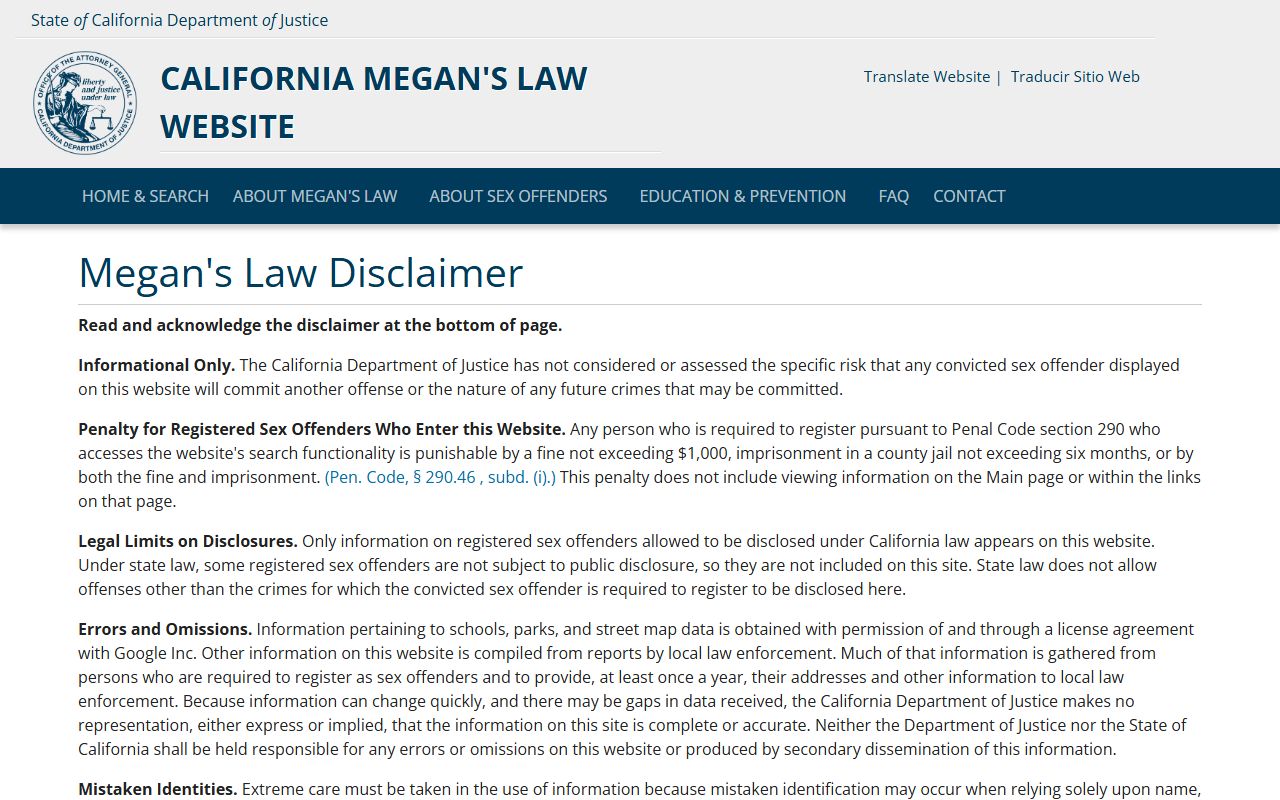
If you cannot find someone you think should be registered, call the San Bernardino County Sheriff. They can tell you if the person is in the system but excluded from public view. Some offenders do not appear online even though they must register with law enforcement. The law protects certain individuals from public disclosure.
Tier System
California uses three registration tiers. The tier depends on the crime. Lower-level offenses like misdemeanor sexual battery typically fall into Tier One. More serious crimes like rape or lewd acts with a child are usually Tier Three. Tier One offenders register for at least ten years. Tier Two offenders register for at least twenty years. Tier Three offenders register for life.
Offenders in Tier One or Tier Two can petition the court to stop registering after they complete the minimum period. The court reviews the petition and decides whether to grant it. The person must have followed all registration rules and completed any required treatment programs. Tier Three offenders cannot petition for removal unless they get a pardon or other legal remedy.
Juveniles who commit sex offenses have different rules. Tier One juveniles register for five years. Tier Two juveniles register for ten years. Some juvenile offenders do not appear on the public website even though they must register with law enforcement. The law protects certain juveniles from public disclosure to help them rehabilitate.
California Registration Law
Penal Code Section 290 is the main statute requiring sex offender registration. This law lists all crimes that trigger a registration requirement. It covers rape, sodomy, lewd acts with a minor, sexual battery, and many other offenses. Anyone convicted of these crimes must register as a sex offender. The registration period depends on the tier.
Update requirements are in Penal Code Section 290.012. Most people update once per year on their birthday. Some update every 30 or 90 days. Failing to update on time is a crime. Penalties include jail time and fines. Law enforcement treats registration violations seriously because accurate information is essential for public safety.
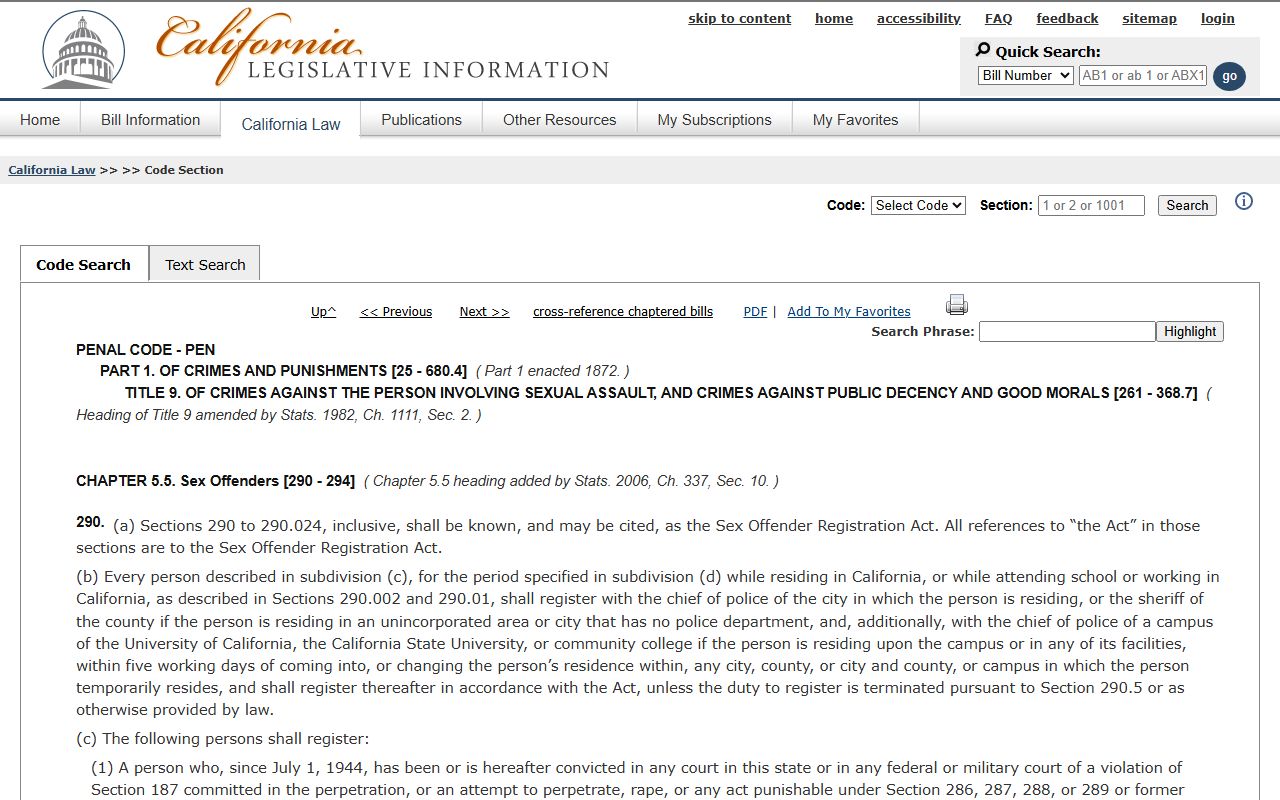
Penal Code Section 290.46 requires the Department of Justice to post sex offender information on the internet. This statute is the legal basis for the Megan's Law website. It explains what data can be shared with the public. Police can disclose name, address, photo, physical description, and details about the crimes. Vehicle information is also public.
Using registry information to harass or harm an offender is illegal. If you use data from the Megan's Law website to commit a crime, you face serious penalties. Felony misuse can result in five years in prison. Misdemeanor misuse carries fines from $10,000 to $50,000. Civil lawsuits are also possible. The registry is meant to protect the public, not to enable vigilante action.
County Sheriff Services
San Bernardino County provides additional information through the sheriff's office. Visit wp.sbcounty.gov/sheriff/divisions/information-services/ to learn about records and registration services. The page has contact information for the registration unit.

Deputies conduct compliance checks to verify that offenders are at their registered addresses. They also investigate violations. If someone fails to register or provides false information, the sheriff can file charges. The county district attorney prosecutes registration violations. Prosecutors take these cases seriously because offenders who do not comply pose a higher risk to the community.
The sheriff works with schools and community groups to educate the public about sex offender registration. They sometimes hold meetings where deputies explain how the system works and what residents can do to stay safe. These meetings are free and open to the community. Check with your neighborhood association or local school to find out when the next session is scheduled.
State Programs
The California Department of Justice manages the statewide sex offender registry. Their website at oag.ca.gov/sex-offender-reg has forms, FAQs, and policy information. You can contact the DOJ by email at MegansLaw@doj.ca.gov if you have questions about the registry or need help with a specific issue.
The Department of Corrections and Rehabilitation supervises sex offenders on parole. CDCR runs a GPS monitoring program that tracks parolees around the clock. All sex offender parolees wear electronic ankle bracelets. If they enter a restricted area like a school or park, the system sends an alert. Parole agents respond quickly to violations.
If you want to know if someone is in state prison, use the California Incarcerated Records and Information Search tool at ciris.mt.cdcr.ca.gov. You can search by name or CDCR number. The results show the person's custody status, current location, and parole hearing dates. This is useful for tracking offenders who are still serving time before they are released and required to register.
National Search
The U.S. Department of Justice operates a national sex offender registry at nsopw.gov. This tool searches databases from all 50 states. Use it if you think someone may have registered in another state before moving to California. The national registry helps track offenders who move around the country.
The national tool does not replace the state registry. Some states update their data more often than others. If you need current information about a California offender, use the state Megan's Law site first. The national tool is best for checking out-of-state registrations or finding someone who has lived in multiple states.
Community Safety
Knowing about registered sex offenders in your area is one part of keeping your family safe. Talk to your kids about strangers and teach them to tell you if anyone makes them uncomfortable. Set clear rules about where they can go and who they can be with. Check the Megan's Law website regularly to stay informed about offenders near your home or your child's school.
If you see a registered sex offender violating the rules, call the San Bernardino County Sheriff. Common violations include living too close to a school, failing to update on time, and providing a false address. The sheriff investigates these complaints. They take registration violations seriously because offenders who do not follow the rules pose a risk to the community.
You can also join a Neighborhood Watch group or attend community safety meetings. The sheriff's office sometimes holds sessions where they explain how the registry works and what residents can do to protect themselves. These meetings are free and open to the public. Check with your neighborhood association to find out when the next session is scheduled.
Nearby Cities
Sex offender registration information for other cities in the region: